Valokuvia Berliinistä vuosilta 1985, 1991 ja 1998
Kuvasarjaan liittyvä essee alla
Documentary photos from Berlin over the years 1985, 1991 and 1998
Essay related to the image series below
Suuri illuusio
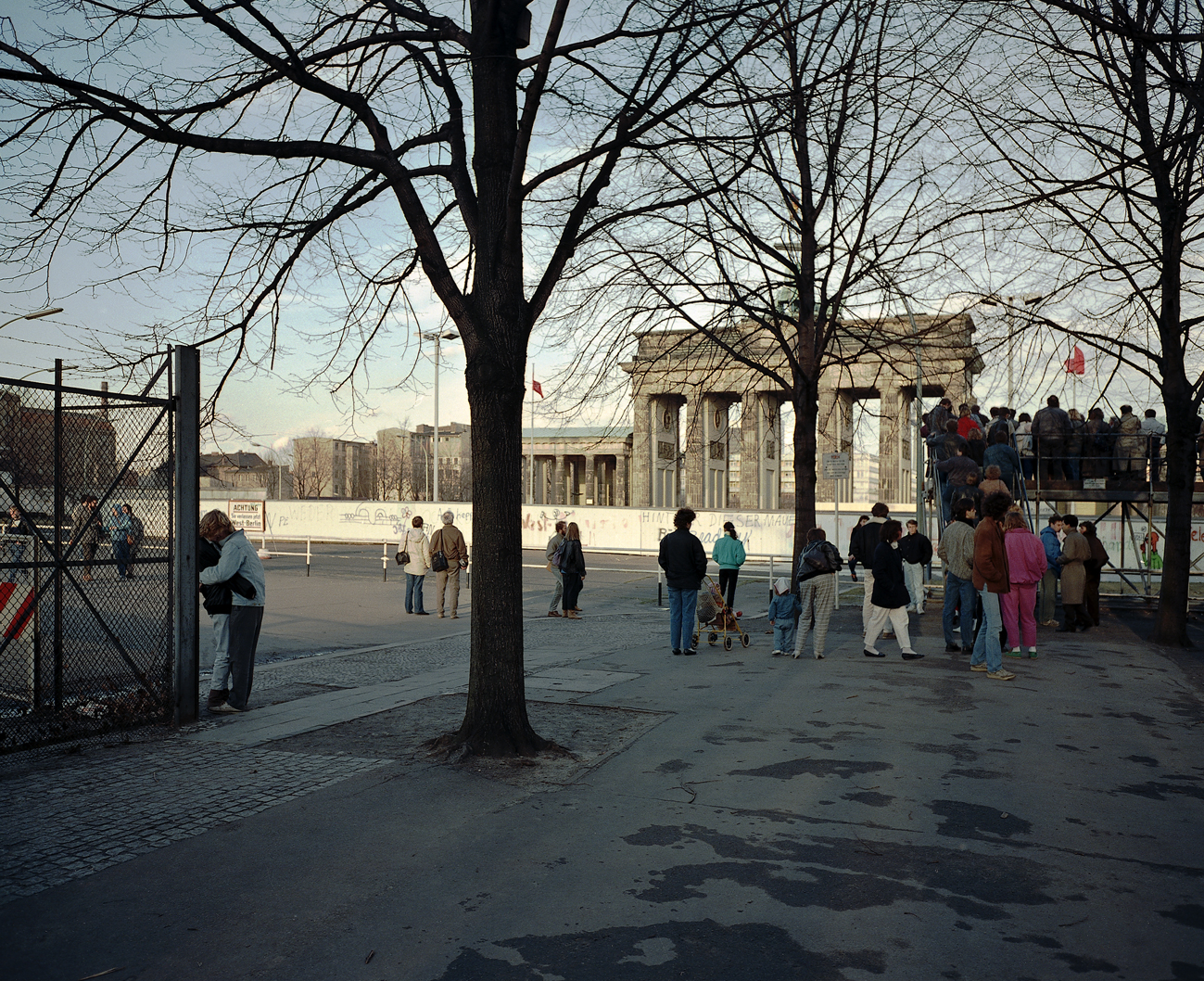
Olen ollut aina kiinnostunut valokuvan dokumentoivasta käytöstä. Eikä se tarkoita pelkästään välineelle sinänsä hyvinkin luonteenomaista tallentamista. Dokumentointi on hyvin aika- ja historiatietoista toimintaa. Dokumentoija saapuukin usein paikalle tallentamaan jo katoavaksi tuomittua. Ja mikäpä ei olisikaan niin katoavaista, kuin juuri valokuvaamalla tallennettu nykyhetki. Katoaminen ja valokuva ovat ilmeiset liittolaiset.
Olen valokuvannut Berliiniä kolmeen otteeseen vuosina -85, -91 ja -98. Kiinnostusta kaupunkia kohtaan ei varmaankaan tarvitse perustella, onhan se monella tavoin Euroopan viimeisen sadan vuoden myrskyisen historian kulminaatiopiste. Berliinin kaduilla on nähty poikkeuksellisen monia tapahtumia, joiden vaikutus on ulottunut maailman jokaiseen kolkkaan.
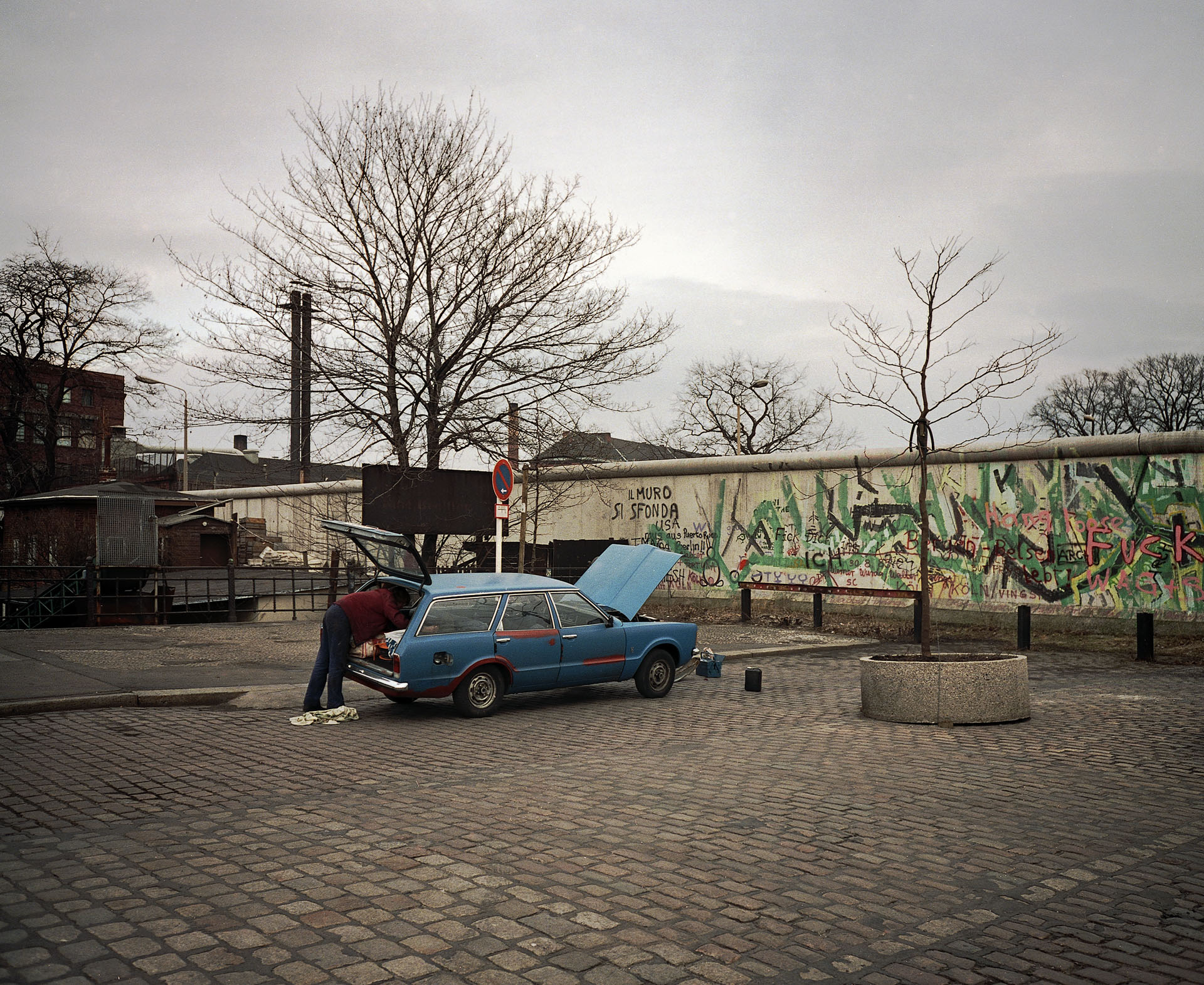
Jaettu Berliini oli tietyllä tapaa jopa banaalin ilmeinen kuva kukoistuksensa tuhonneen kaupungin kohtalosta. Se oli myös keskeinen symboli kylmän sodan kahtiajakautuneesta maailmasta. Berliiniä olikin vaivatonta tarkastella konkreettisiksi objekteiksi ja betoniksi muuttuneena historiana. Käsitteellisenä ”teoksena” kaupunkia lukeneelle muuri oli kuin näkyväksi objektiksi muuttunut vihamielinen ajatus. Berliiniä saattoi siis tarkastella eräänlaisena kollektiivisena teoksena, teoksena, jonka muovautumisprosessia voisi nimittää yksinkertaisesti ”historiaksi”.
Kahdeksankymmenluvun Berliini ei ollut ainoastaan menneen historian näyttämö, vaan kuin maailmansotien välissä kukoistaneen huono-onnisen Weimarin tasavallan miniatyyrinen muistuma. Värikäs ja monin tavoin kukoistava demokratia totalitarismin puristuksessa.
Berliini oli myös legendaarinen kulttuurikaupunki. Se oli kaikenlaisen kokeellisen ja perinteitä murtavan kulttuuri keskus. Berliini oli tuolloin koko maailman taiteen keskipiste. Tuon maineen houkuttelemana itsekin sinne alun perin matkustin.
Ehkäpä juuri tuo merkillinen, historian musertama kaupunki itsessään kehotti taiteilijoita hylkäämään edellisten sukupolvien totuudet. Historian kuumaan taskuun unohtuneessa kaupungissa oli valittava ääripäistä. Berliinin maalarit hämmensivät tuolloin koko maailman taidepiirejä yltiöpäisillä ekspressiivisillä tauluillaan. Kokeelliset taiteet ja moninaiset, nyt jo nimettömyyteen kadonneet kokeilut kukoistivat. Enkä myöskään minä, valokuvaaja voinut jäädä kadunmiehen kohtalon kokoiseksi historian katsojaksi. Olihan heitä niin monia lakaistu näiltä kaduilta. Ehkä kaupunki kehotti myös itseäni valitsemaan valokuvauksen vanhat konventiot hylkäävän näkökulman. Ekspressiivistä taidetta pursuavassa kaupungissa oli johdonmukaista valita ilmaisun toinen ääripää: ambivalentin tarkkaileva näkökulma, katsojavalokuvaajan lähes epäfyysisen epämääräinen läsnäolo. Ikään kuin taiteilijan omaa näkökulmaa ei olisi olemassa. Kuin valokuvaaja ei enää haluaisikaan lähestyä kohdettaan, jonka rajattu ja viimeistelty esittäminen kuitenkin tuottaisi väistämättä voimakkaamman kannanoton.
En ole pitänyt yllättävänä sitä, että juuri tuon kaltainen ”neutraali” kuvaustyyli tuli olemaan myös saksalaisten värivalokuvaajien piirissä myöhemmin kovin suosittua. Tämä lähestymistapa todellisuutta kohtaan sopii hyvin heidän kohtuuttomaan historiaansa ja kovia kokeneen kansan yritykseen ymmärtää paikkaansa tässä tarinassa. Oli otettava askel taaksepäin nähdäkseen kokonaisuus ilman lähikontaktin tuomia tunnekuohuja.
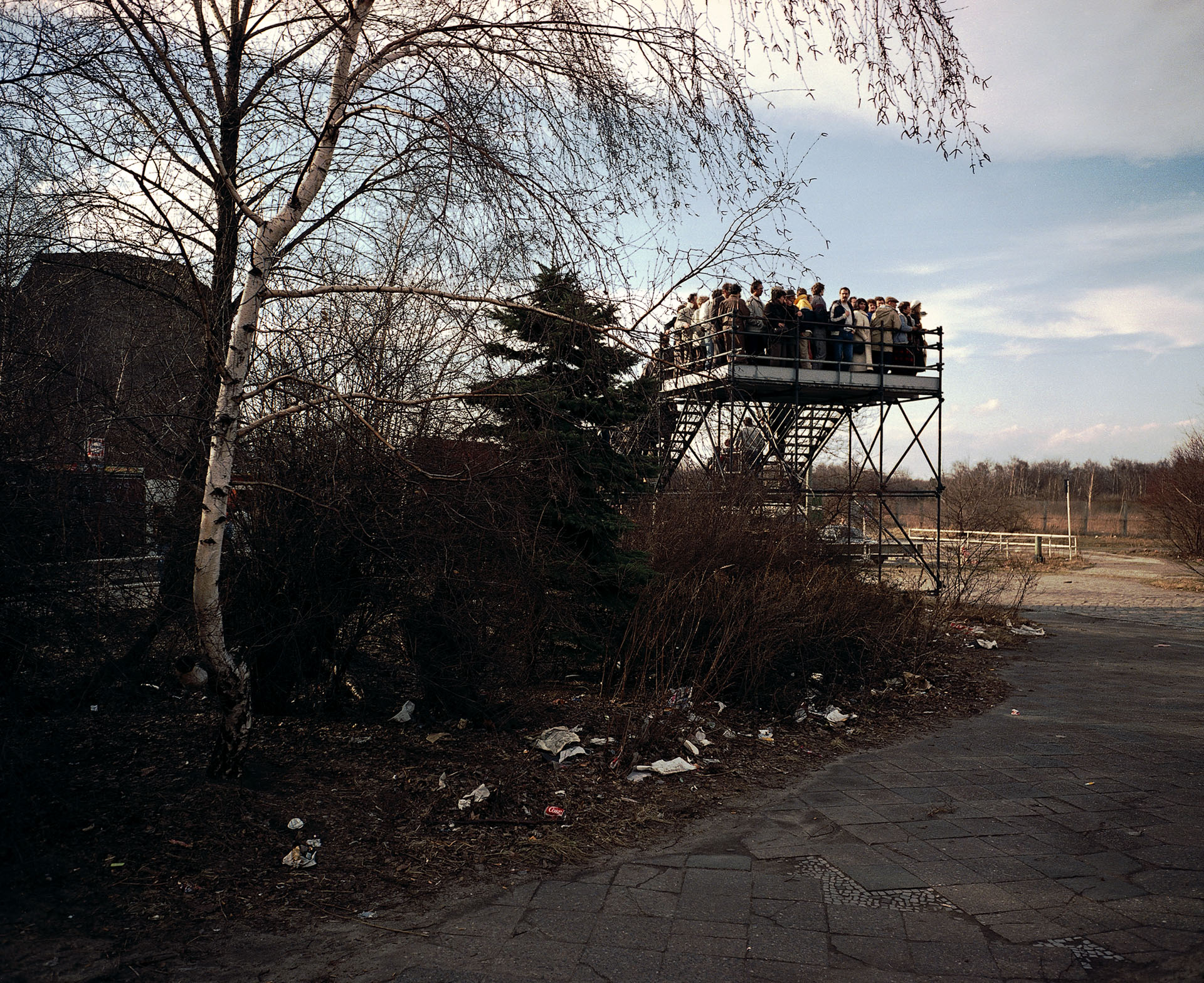
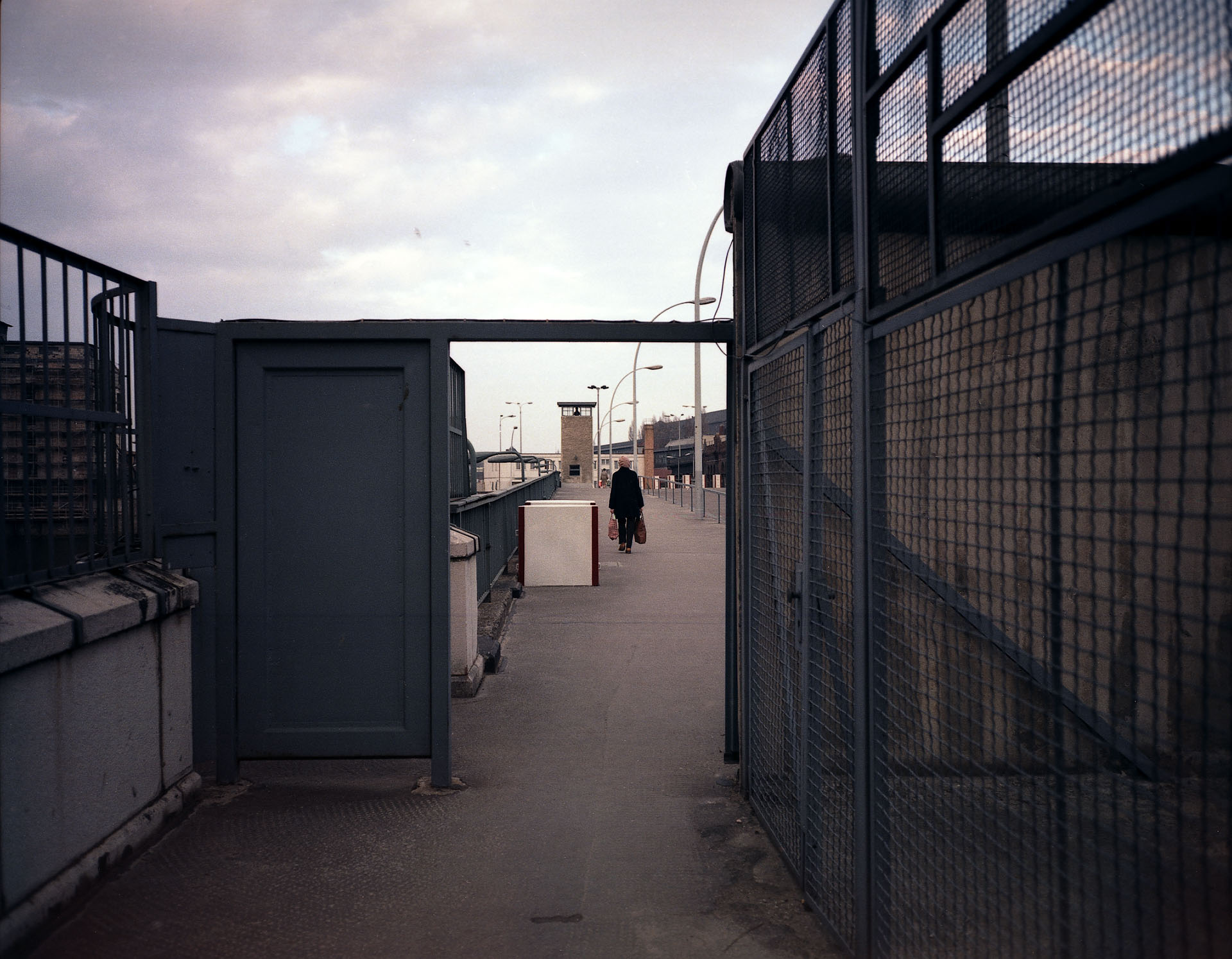
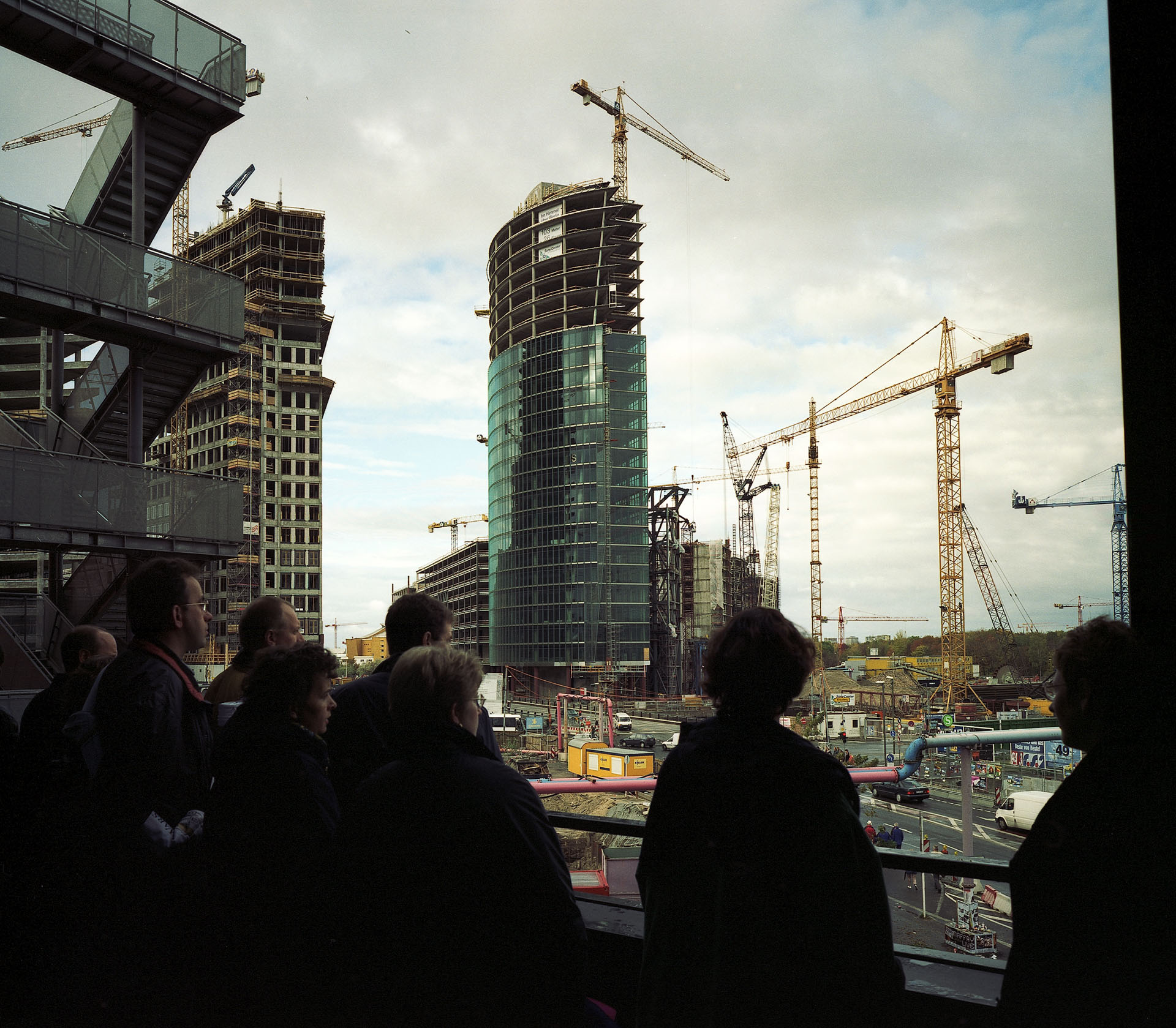
Kuvasin Berliinin näkymiä kolmessa jaksossa. Nyt jälkikäteen on houkuttelevaa sanoa noiden kuvaushetkien olleen juuri oikeita. Vältin tallentamasta historian rattaiden hampaiden välähdyksiä. Ei suuria käännekohtia, ihmisten järkyttäviä kohtaloita tai edes muurin tunnekylläisiä poistamisen hetkiä. Ehkä halusin välttää historian banalisoimisen. Historia ei monestikaan näy puhtaimpana siellä, mistä ajankohtainen uutiskuva sitä tapaa etsiä.
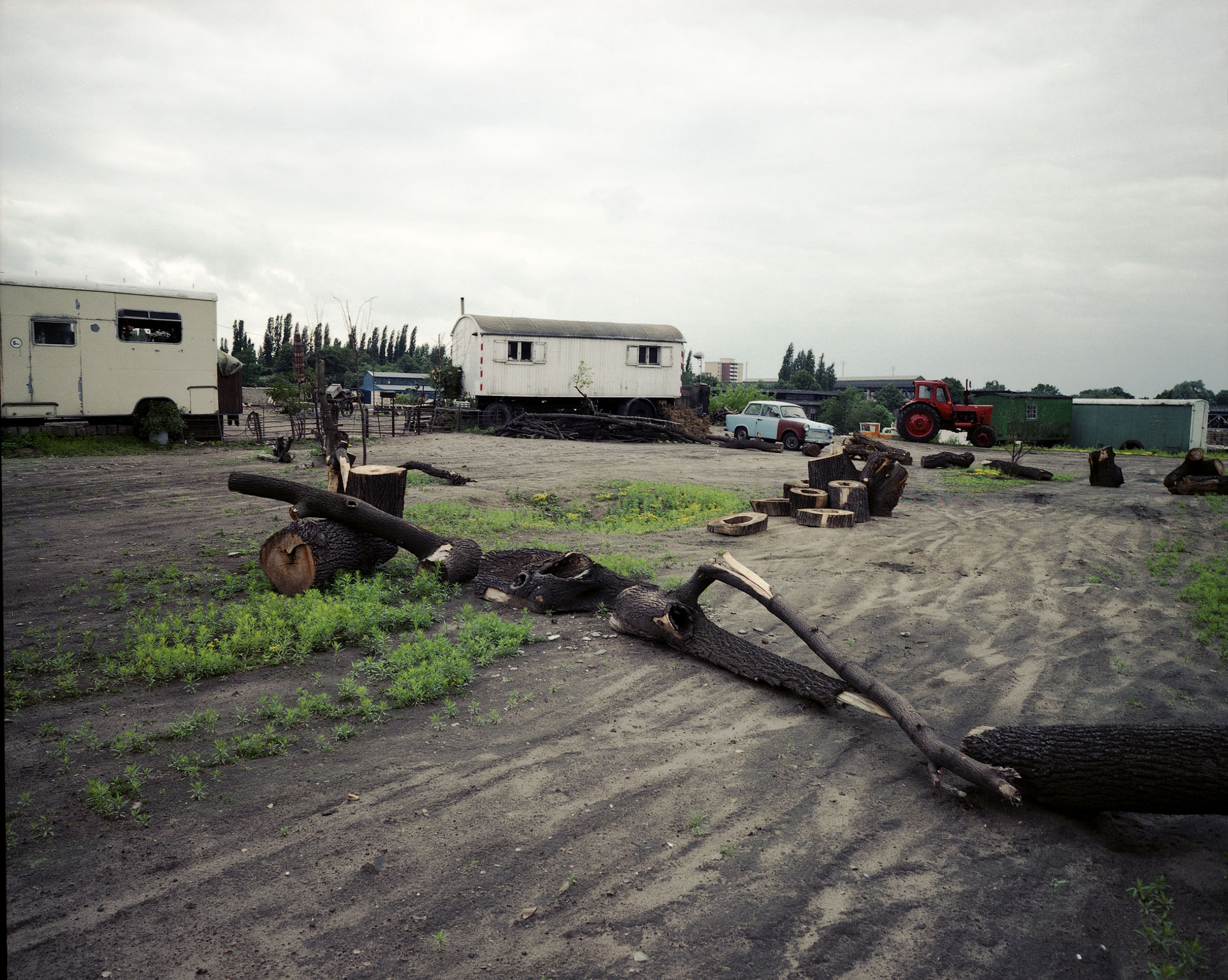
Jos minulta nyt kysyttäisiin mikä tuolloisessa Berliinissä oli vaikuttavinta, voisin vastata: Hiekka! Harvan kaupungin alta löytyy yhtä neitseellistä hiekkaa. Ja ehkä juuri tuo olikin muurin jälkeensä jättäneen suurkaupungin runollisin, tosin myös kovin lyhyt aikakausi, kun sen kadut ja korttelit halkaisi vaalea ja lähes koskematon hiekkavana.
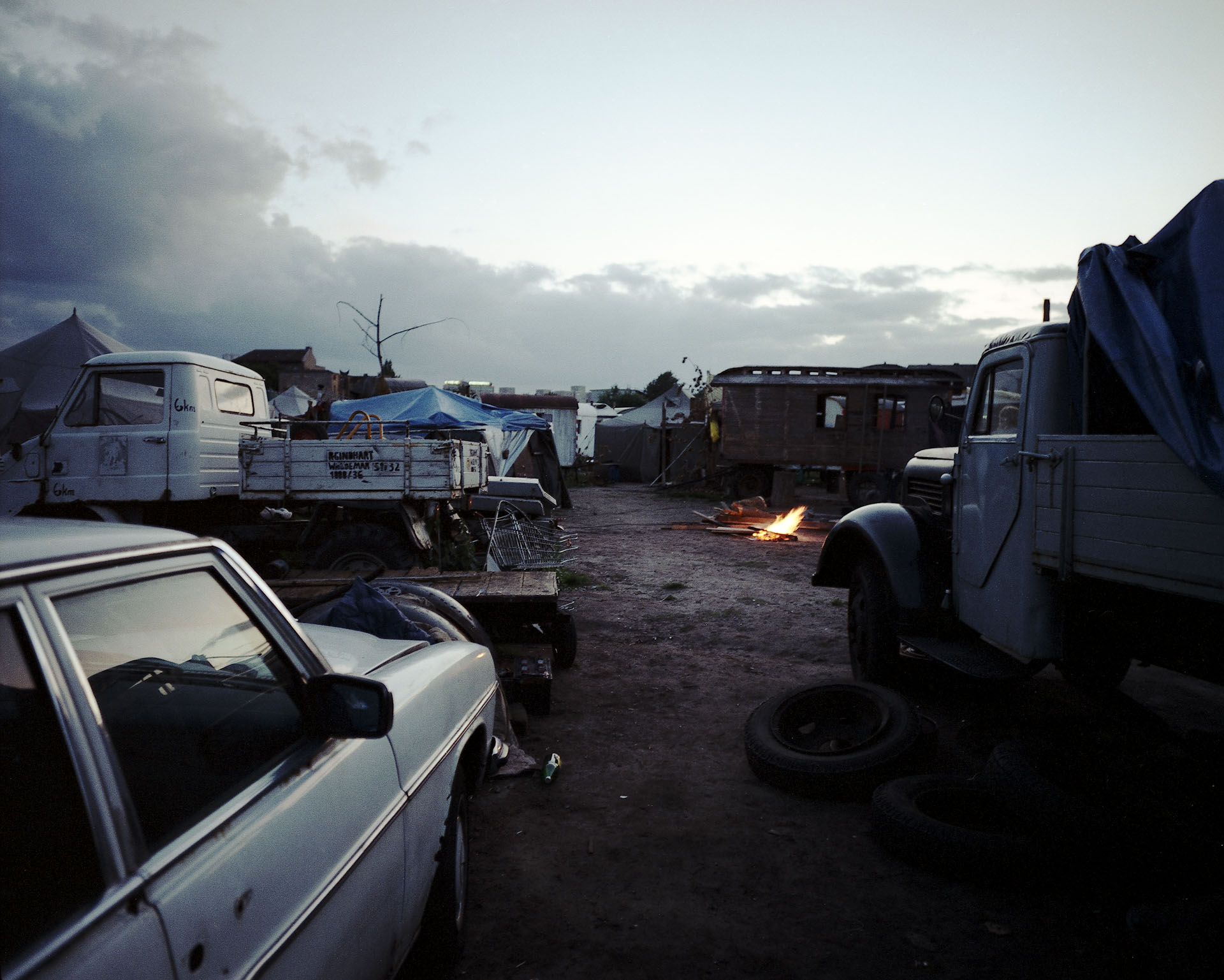
On silti muistettava, että tuo sisämaahan karannut rantakaistale oli myös entinen miinakenttä ja monen pakoa Itä-Berliinistä yrittäneen ihmisen kuolinpaikka. Kohta omistajuutta vaille jäänyt ”Niemandsland” – kuten saksalaiset muurien väliin jäänyttä aluetta nimittivät – muuttui villiksi erämaaksi. Hiekkakentät täyttyivät uudisasukkaiden vankkureista ja teltoista. He olivat Berliinin vallatuissa taloissa vaihtoehtoista elämäntyyliään vuosikymmenet toteuttaneita ihmisiä. Hekin olivat työtään jatkavan historian alle jauhautuvia berliiniläisiä, oman kohtalonsa silminnäkijöitä. Tuo köyhä, koditon joukko oli valmis puolustamaan leirejään jopa väkivallalla ja sen sain itsekin kokea. Kameran sentään ehdin ennen hyökkäystä laukaista.
Berliinin historian käänteiden kauneinta näkyä en valokuvaamalla voinut tallentaa: Itä-Berliiniläisen ”vapautetun” koulun pihamaa oli täplitetty pienten koululaisten askartelemilla punatähdillä. Osassa oli jäljellä puinen tikku, josta tähteä oli ilmeisesti ollut määräys kannatella ja heiluttaa. Kyseessä oli varmaankin paraateja ja juhlallisuuksia varten ja ehkä jopa virallisten ohjeiden mukaan valmistettu esine. Ja kuitenkin nuo kömpelöt tähdet olivat lasten käsityön jäljiltä kaikki erilaisia. Pihamaalle, korkean koulun avoimista ikkunoista lennähtäneinä ne muodostivat vihreälle nurmelle oman vaihtoehtoisen tähtitaivaansa. Tuossa myöhäisten auringonsäteiden valaisemassa näyssä oli mukana tähtien leijailu, vapauden riemu ja tähtien pysähtyminen lopullisiin asemiinsa. Eikä näidenkään tähtikuvioiden järjestys ollut ajan ja historian käänteissä ehkä jälleen sivullisiksi katsojiksi jäävien lasten päätettävissä.
© Veli Granö, 2005
A Great Illusion
I have always been interested in the documentary use of photography—and this goes beyond the simple act of recording, which is, in itself, highly characteristic of the medium. Documentation is an activity deeply attuned to time and history. Often, the person documenting arrives on the scene to capture something already destined to vanish. And what could be more fleeting than the present moment, once it has been captured in a photograph? Disappearance and the photograph are natural allies.
I have photographed Berlin on three separate occasions: in 1985, 1991, and 1998. There is little need to justify an interest in the city; in many ways, it serves as a focal point for the turbulent history of Europe over the last century. The streets of Berlin have witnessed an extraordinary number of events whose impact has reached every corner of the globe.
In a sense, a divided Berlin offered an almost banally obvious illustration of the fate of a city that had destroyed its own former glory. It also stood as a central symbol of a world split in two by the Cold War. It was easy to view Berlin as history transformed into concrete objects and solid matter. To those who interpreted the city as a conceptual ”work,” the Berlin Wall appeared as a hostile idea that had taken on a tangible, physical form. Thus, Berlin could be seen as a kind of collective work—a work whose ongoing formation might simply be called ”history.” Berlin in the eighties was not merely a stage for past history; it was like a miniature echo of the ill-fated Weimar Republic that had flourished between the two world wars—a vibrant democracy, thriving in many respects, yet caught in the grip of totalitarianism.
Berlin was also a legendary cultural hub—a center for all manner of experimental and iconoclastic culture. At that time, Berlin stood at the very heart of the global art world. It was this reputation that originally drew me there myself.
Perhaps it was this peculiar city—crushed by history—that compelled artists to reject the truths held by previous generations. In a city forgotten in the sweltering pocket of history, one had to choose between extremes. Berlin’s painters stunned the international art scene with their wildly expressive canvases. Experimental arts flourished, alongside a multitude of ventures that have since faded into anonymity. As a photographer, I, too, could not remain a mere spectator of history, sharing the fate of the ordinary man on the street—for so many such lives had been swept from these very streets. Perhaps the city also urged me to adopt an approach that abandoned the traditional conventions of photography. In a city overflowing with expressive art, it was logical to choose the opposite extreme of expression: an ambivalently observant perspective—the almost disembodied, indistinct presence of a photographer-as-spectator. As if the artist’s own point of view did not exist. As if the photographer no longer wished to approach their subject—even though a framed, polished presentation of that subject would inevitably have constituted a stronger statement.
It does not surprise me that this kind of ”neutral” photographic style later became highly popular among German color photographers. This approach to reality resonates with their extreme history and the efforts of a people who have endured so much to understand their own place within that narrative. It was necessary to take a step back to see the whole picture, free from the emotional turbulence that comes with close proximity.
I photographed scenes of Berlin in three separate phases. Looking back, it is tempting to say that those moments were the perfect times to capture them. I avoided recording the grinding gears of history. There are no major turning points, no harrowing human fates, not even the emotionally charged moments when the Wall was dismantled. Perhaps I wanted to avoid trivializing history. Often, history is not most clearly visible where contemporary photojournalism typically goes looking for it.
If I were asked now what was most striking about Berlin back then, I could answer: the sand! Few cities have such pristine sand lying beneath them. And perhaps this was the most poetic—albeit very brief—era for the metropolis left in the wake of the Wall: a time when its streets and city blocks were cut through by a pale, almost untouched ribbon of sand.
Yet, one must remember that this stretch of ”beach” stranded inland was also a former minefield—a place where many who attempted to flee East Berlin met their deaths. This ”Niemandsland”—as the Germans called the area between the walls—suddenly left without an owner, transformed into a wild, untamed expanse. The sandy fields filled with the makeshift dwellings and tents of new settlers. These were people who, for decades, had pursued an alternative lifestyle within Berlin’s squatted buildings. They, too, were Berliners—caught in the grinding gears of history as it continued its course—witnesses to their own fate. This impoverished, homeless group was prepared to defend their camps, even with violence—something I experienced firsthand. I did, however, manage to snap a photo just before the attack.
The most beautiful sight amidst the twists and turns of Berlin’s history was one I could not capture in a photograph: the courtyard of an “liberated” school in East Berlin was dotted with red stars, crafted by young schoolchildren. Some still had a wooden stick attached—evidently intended for holding and waving the star. These objects had likely been produced for parades and official ceremonies, perhaps even following specific, state-issued instructions. And yet, being the handiwork of children, each of these clumsy stars was unique. Having drifted down from the open windows of the tall school building, they formed their own alternative starry sky upon the green lawn. In this scene—illuminated by the rays of the late sun—one could sense the stars’ gentle descent, the exultation of freedom, and their final coming to rest in their ultimate positions. Nor was the arrangement of these constellations left to the children—who, in the shifting tides of time and history, were once again relegated to the role of mere bystanders.
© Veli Granö, 2005

